Mineral & Lapidary Guides • October 15, 2026
Why Do Amber and Chalcedony Glow Blue Under UV Light?
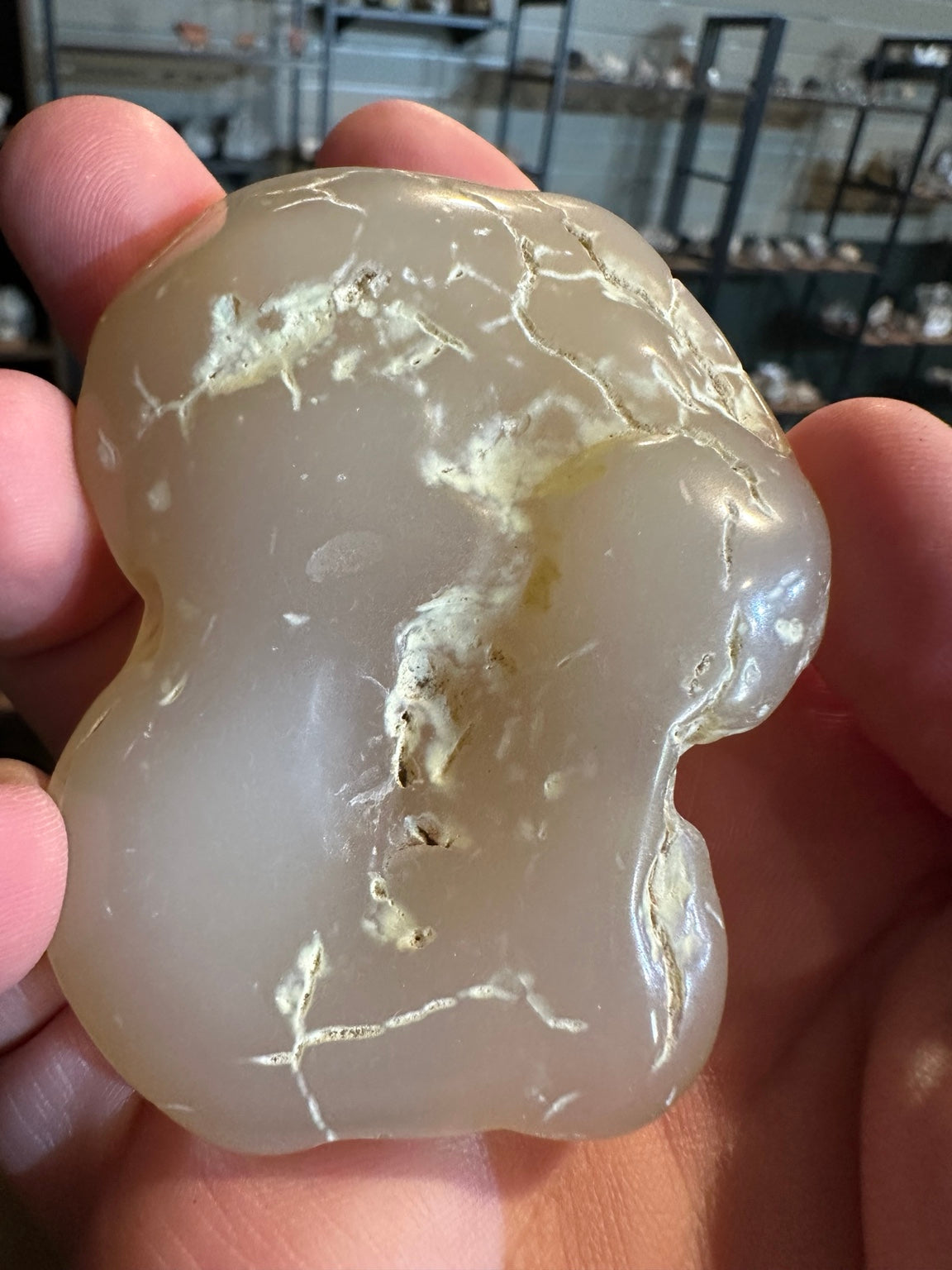
Some collector specimens reveal a vivid second appearance under ultraviolet light. Natural amber and certain chalcedony pieces can show blue fluorescence, although they are very different materials and the causes of their reactions should not be assumed to be the same.
Why amber can fluoresce
Amber is fossilized tree resin rather than a crystal mineral. Certain organic compounds can absorb UV light and emit visible light. The perceived fluorescence depends on resin chemistry, lamp wavelength, exposure settings and viewing conditions.

See the 6.9 oz Sumatran blue-fluorescent amber and its listing photographs. A blue glow is a useful collector feature, but fluorescence alone does not authenticate amber.
Why chalcedony may respond differently
Chalcedony is a form of microcrystalline quartz. Fluorescence can relate to trace substances, inclusions or associated material; without testing, the precise activator cannot be named confidently.

The Nevada botryoidal chalcedony nodule reportedly fluoresces blue across its surface when viewed with a flashlight believed to be approximately 395 nm. Neither the lamp wavelength nor the cause of fluorescence has been independently verified.
365 nm vs 395 nm UV lamps
Both are longwave ultraviolet wavelengths, but the visible response of a specimen can change considerably with lamp selection, ambient light and filters. A product photograph captures one setup and should not be treated as a guarantee of identical color with another lamp.
Safe fluorescence viewing
- Use an appropriate mineral lamp and follow the manufacturer's eye and skin safety precautions.
- Do not stare into the UV emitter or direct the light toward people.
- Examine specimens in normal light as well as under UV.
- Check each listing for its reported fluorescence color and wavelength confidence.
Browse fluorescent minerals, fluorite specimens, and collector rocks and crystals.