Mineral & Lapidary Guides • October 15, 2026
Dogtooth Calcite vs Bladed Calcite: A Nevada Collector's Visual Guide
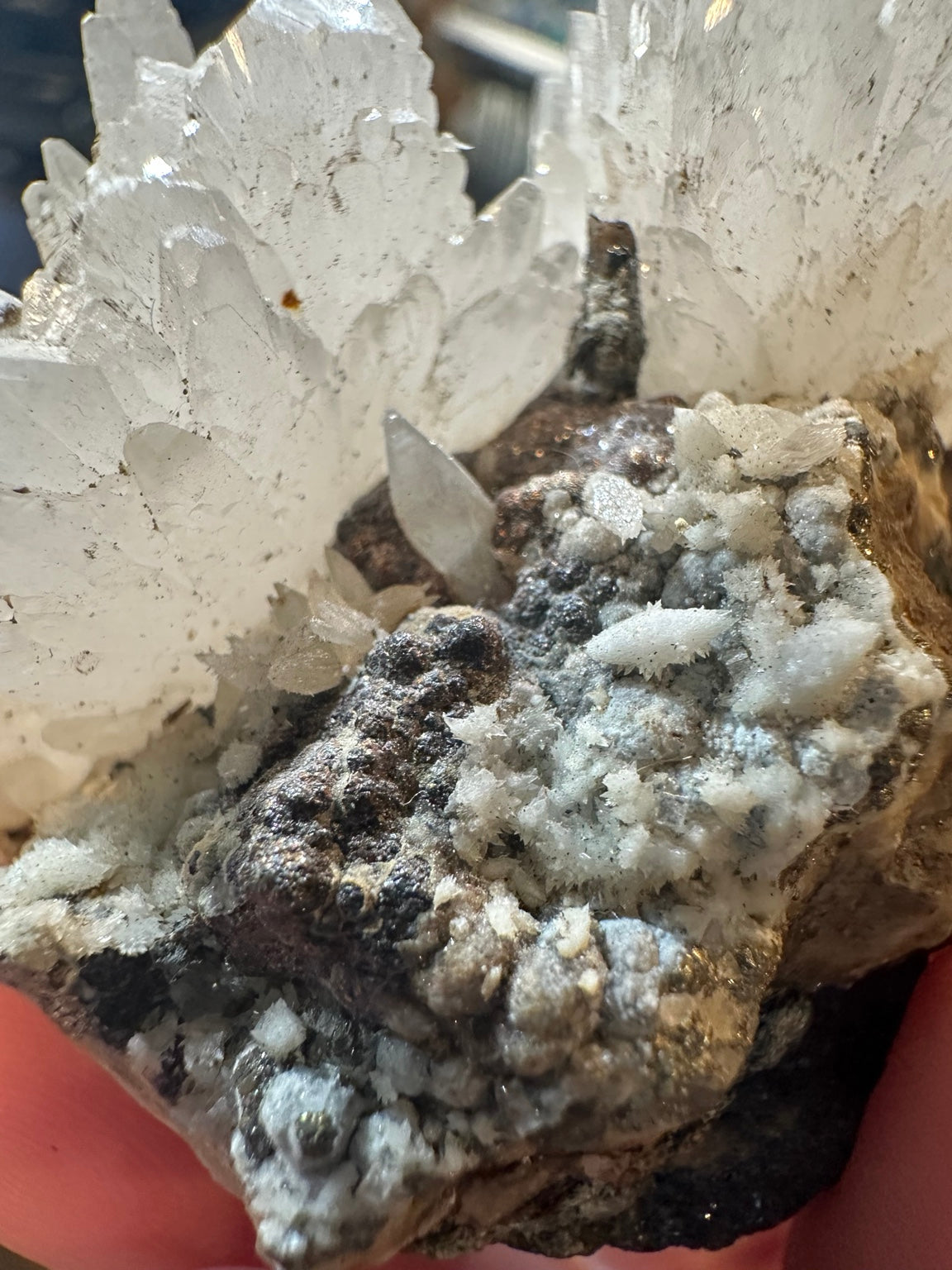
Calcite is calcium carbonate (CaCO3) and forms several crystal habits. In mineral collecting, dogtooth calcite usually refers to sharply pointed scalenohedral crystals, while bladed and radiating describe the arrangement or shape of multiple crystals. Those descriptions can overlap.
Recognizing dogtooth calcite
Look for pointed crystal terminations and well-developed faces. Calcite's Mohs hardness is approximately 3, so fine tips require careful handling. Mineral appearance alone does not prove a specific locality or associated species.

Compare the 4.1 oz Nevada dogtooth calcite specimen with a fan-like example. The pyrite identification and mine provenance on this piece are reported rather than independently verified.
How radiating calcite fans form a display
When many pointed or elongated crystals project outward from a shared growth area, the cluster may resemble a spray or fan. Even within a single specimen, crystals can have different orientations and growth stages.

The 4.5 oz radiating Nevada calcite crystal cluster makes a useful visual comparison for collectors who appreciate sculptural crystal growth.
Calcite with pyrite: what to verify
Pyrite (iron sulfide) can bring metallic brass-colored contrast to pale calcite, but not all gold-toned inclusions are confirmed pyrite. Read specimen-specific notes for the confidence level of the mineral attribution.
Shopping checklist for calcite collectors
- Inspect multiple photographs for intact terminations and natural contact marks.
- Compare weight, shape, and how the matrix supports the crystals.
- Favor clear locality records, and distinguish reported origins from documented mine provenance.
- Avoid acid-based cleaning; use gentle dusting and handle soft crystal points carefully.
Explore more calcite crystals, Nevada minerals, and natural mineral specimens at The Hidden Bazaar.