Mineral & Lapidary Guides • October 15, 2026
Positive vs Negative Trilobite Fossils: Understanding Counterparts
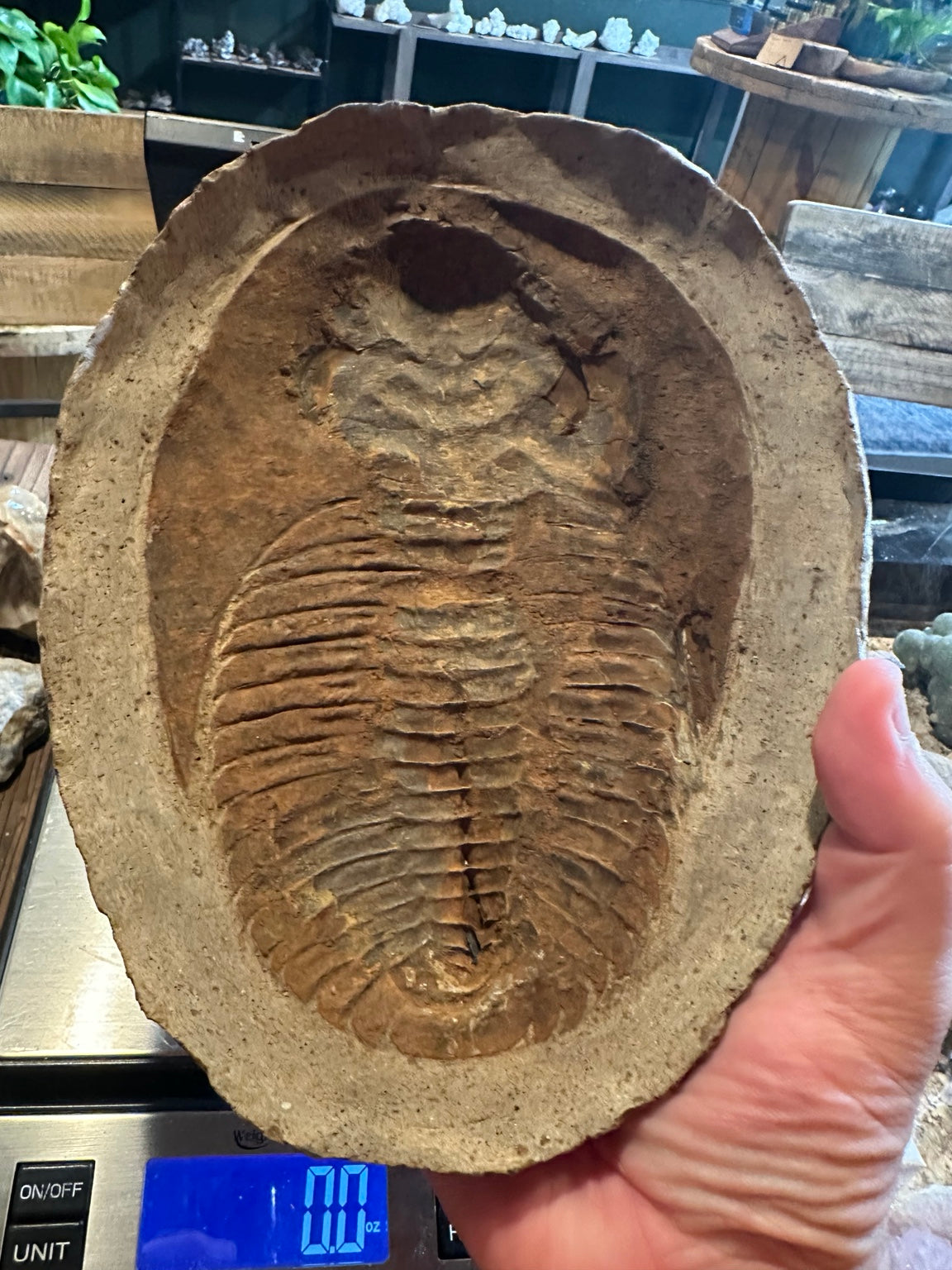
Fossils can preserve a shape in relief or as a recessed impression. Understanding the distinction is especially helpful when evaluating trilobite specimens and their matching rock counterparts.
What is a positive fossil?
A positive surface has features that rise above the surrounding rock. Trilobite anatomy can include a head region (cephalon), segmented thorax and tail (pygidium). The raised material may represent preserved shell, mineral replacement or a natural cast, depending on its preservation.
What is a negative impression?
The negative counterpart records a recessed shape. Grooves and cavities may mirror raised features in a corresponding positive fossil. A negative impression is not automatically a damaged fossil; it may preserve informative anatomy.

The 61.5 oz Moroccan trilobite negative impression is listed as the counterpart to a separately offered positive fossil. Genus, species and precise geological age are not independently verified. The suggested Cambrian attribution remains provisional.
Can you buy the matching half?
Our 70.2 oz Moroccan trilobite display specimen is listed separately. Check each product's current availability and inclusions before purchasing; an individual listing does not necessarily include both halves.
What collectors should look for
- Clear images of body segmentation, the full matrix, and specimen edges.
- Information about repairs, carved details or restoration, when known.
- Documented collecting locality and geological formation rather than assumptions from appearance.
- Accurate weights, condition notes and whether a stand or matching half is included.
Discover more fossils and petrified specimens or explore The Hidden Bazaar mineral collection.